


For generations, Rio Linda and Elverta have been proud, unincorporated communities. While residents identify strongly with their hometown, local government decisions are ultimately made by Sacramento County.
That could someday change.
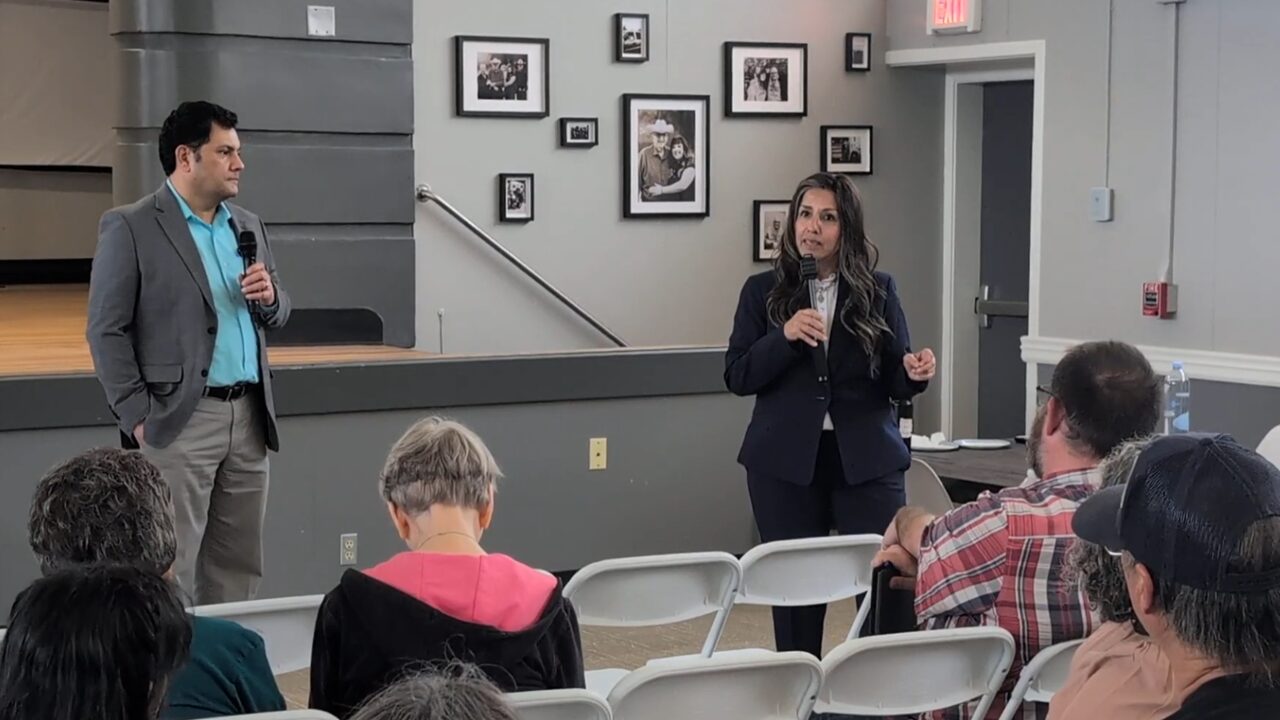
Residents will have an opportunity to learn more about what incorporation could mean during a community meeting hosted by Sacramento County Supervisor Rosario Rodriguez this evening at the Rio Linda Teen Center.
The meeting is informational in nature and is intended to help residents better understand the opportunities, challenges, and realities of forming a new city.
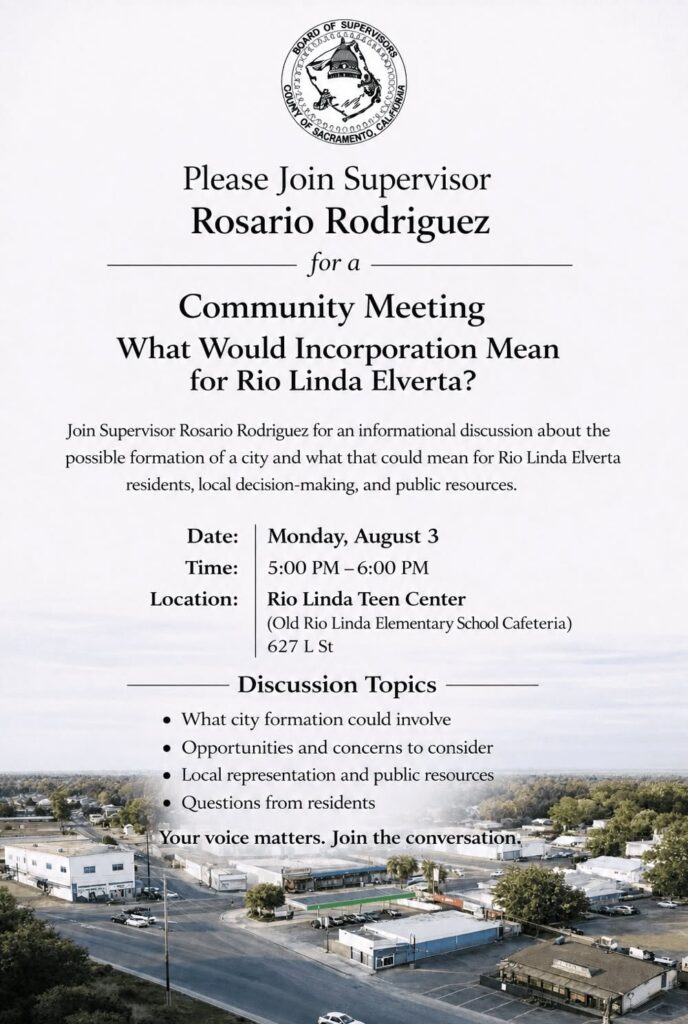
Community Meeting
What: What Would Incorporation Mean for Rio Linda Elverta?
When: Monday, August 3, 2026
Time: 5:00 p.m. – 6:00 p.m.
Where: Rio Linda Teen Center (Old Rio Linda Elementary School Cafeteria)
627 L Street, Rio Linda
Topics are expected to include:
- What city formation could involve
- Opportunities and concerns
- Local representation
- Public resources and services
- Questions from residents
Supervisor Rodriguez has encouraged residents to attend and participate in the discussion.
What Does It Mean to Incorporate?
An incorporated city is an independent municipal government with its own elected city council, local ordinances, budget, and responsibility for providing or contracting for many public services.
Today, Rio Linda and Elverta are governed by Sacramento County. Decisions about zoning, planning, roads, code enforcement, parks, and many other local issues are made through the County Board of Supervisors and county departments.
Forming a city would shift many of those decisions to a locally elected city council. Under California law, incorporations are reviewed through the Local Agency Formation Commission (LAFCO), which evaluates whether a proposed city is financially viable before the proposal can advance to voters. (Calafco)
Why Some Residents Support Cityhood
Supporters have argued for years that Rio Linda and Elverta deserve greater local control over their own future.
Among the commonly cited benefits are:
Local Decision-Making
Instead of relying on one county supervisor representing hundreds of thousands of residents, city government would consist of elected officials focused solely on Rio Linda and Elverta.
Supporters believe local officials would better understand neighborhood priorities and respond more quickly to community concerns.
Greater Accountability
Residents would know exactly who is responsible for local decisions.
Issues such as code enforcement, neighborhood beautification, road maintenance priorities, economic development, and land use would be discussed by officials elected specifically by the community.
More Control Over Development
Few topics have generated more discussion locally than proposed developments.
Recent debates over high-density housing proposals, industrial projects such as the Greenfarm slaughterhouse proposal, and other county land-use decisions have left many residents frustrated that local recommendations were ultimately overridden.
Supporters argue that a city council accountable only to Rio Linda and Elverta voters could provide a stronger local voice in future development decisions.
Community Identity
Rio Linda has long maintained a unique identity despite being part of unincorporated Sacramento County.
Many advocates believe incorporation would strengthen that identity while allowing the community to chart its own future.
The Challenges of Becoming a City
Cityhood also comes with significant responsibilities.
Perhaps the biggest question is financial sustainability.
A new city must generate enough revenue to pay for the services it assumes. That means carefully analyzing property tax revenue, sales tax, development fees, state funding, and other income against the cost of police services, planning, administration, street maintenance, parks, and other municipal functions.
California requires detailed fiscal analysis before incorporation proposals can move forward, and many proposals statewide have stalled because they could not demonstrate long-term financial viability. (Calafco)
Residents would also need to consider:
- The cost of creating a new city government.
- Hiring professional staff or contracting for services.
- Whether existing revenues would be sufficient without increasing taxes or fees.
- Which services would remain with Sacramento County and which would transfer to the new city.
It’s Not a Quick Process
Unlike simply holding an election, incorporation in California is a lengthy process.
LAFCO must review detailed financial studies, service plans, environmental considerations, and governance proposals before determining whether incorporation is feasible. If approved, the proposal would ultimately go before local voters for a final decision. (Calafco)
Organizations advocating for reform of California’s incorporation laws have argued that the current process is expensive and places significant burdens on communities seeking self-governance, making new city formation more difficult than annexation into an existing city. (California Unincorporated)
A Conversation Worth Having
Whether residents support incorporation, oppose it, or simply have questions, today’s meeting offers an opportunity to hear about the process, ask questions, and learn what cityhood could realistically mean for Rio Linda and Elverta.
This is not a vote, nor does it commit the community to incorporation. Instead, it is part of what could become a much larger conversation about the future of one of Sacramento County’s largest unincorporated communities.
As Rio Linda continues to grow and faces increasing pressure from development throughout the region, questions about local control, representation, and community identity are likely to remain part of the discussion for years to come.
Post Views: 2
