
By John Todd | Rio Linda Online
ELVERTA — Sacramento County’s approval of a proposed animal slaughter and processing operation on Palladay Road has opened a new and consequential phase in a land-use fight that has drawn sustained opposition from nearby residents and two local advisory bodies.

The Greenfarm project, proposed for 8645 Palladay Road, received approval from the Sacramento County Zoning Administrator on July 16. That decision did not end the dispute. The Rio Linda-Elverta Community Planning Advisory Council has filed an appeal, temporarily stopping the County from issuing the use permit while the case moves to a new public hearing.
County officials are currently targeting Sept. 14, 2026, for the appeal hearing. That date has not yet been formally placed on a published agenda and remains subject to change.
The appeal will place the project before the Sacramento County Board of Zoning Appeals, a body made up of the same appointed members who serve on the County Planning Commission, but acting under a different legal authority.
That procedural distinction is important. The next hearing is not merely another advisory review and it is not an automatic appeal to the elected Board of Supervisors. The Board of Zoning Appeals will have the authority to uphold the project, change it, add restrictions or overturn the approval entirely.
For residents who have opposed the operation for months, the appeal represents another chance to challenge both the project and the County’s reasoning for allowing it in an agricultural-residential neighborhood.
What Greenfarm proposes
Greenfarm, identified in County records as PLNP2025-00038, would operate on an approximately 20-acre property zoned AR-5, or Agricultural Residential with a five-acre minimum parcel size.
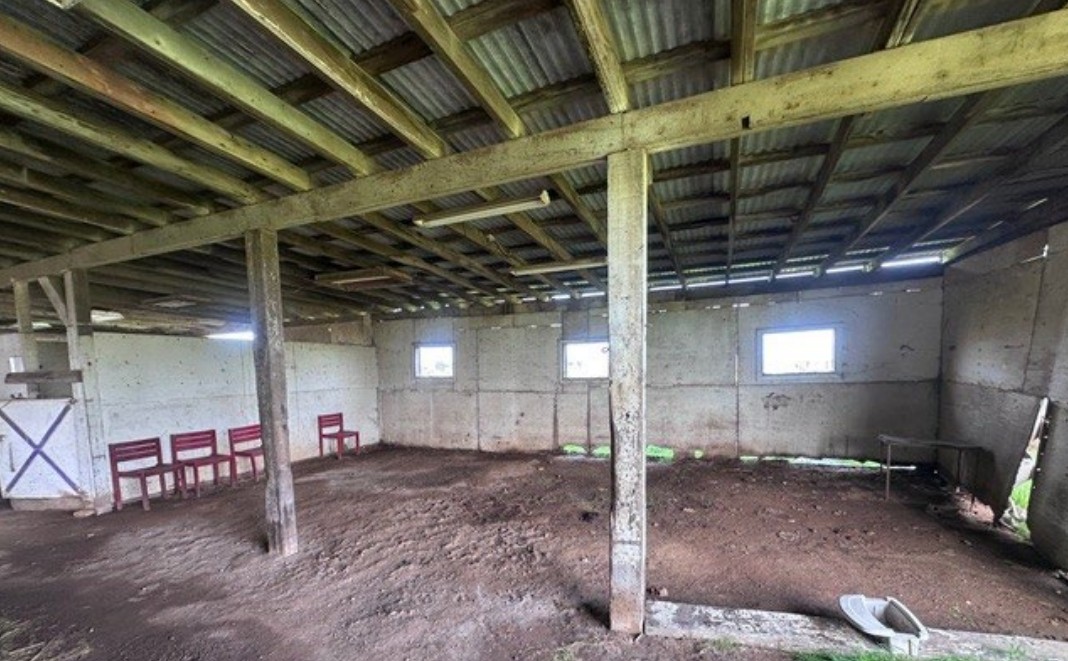
The proposal calls for converting an existing agricultural building into an indoor facility where livestock would be slaughtered and processed. The applicant has described the business as a small-scale operation serving customers seeking halal meat.
Customers would be able to select animals for slaughter and processing. Earlier descriptions indicated that animals would primarily be raised on the property, although later County documents and public testimony indicated that animals could also be brought to the site by customers.
Operations were proposed for Monday through Saturday, generally between 9 a.m. and 5 p.m. The applicant initially said the business would be operated by the property owners without outside employees. A separate state slaughter license and other applicable approvals would still be required before operations could legally begin. (riolindaonline.com)
The project also includes improvements to the property’s driveway and parking area. Rather than constructing a large new industrial building, the applicant proposes adapting an existing agricultural structure.
That limited physical construction appears to have played a central role in the County’s determination that the project could qualify for an exemption from a more extensive environmental review.
A central dispute over scale
One of the most persistent community concerns has been the changing description of how many animals could be processed at the site.
When the project was first presented to the Rio Linda-Elverta CPAC in January, residents and council members were told that the operation would process approximately two or three animals per week.
By the time the proposal reached the Sacramento County Agricultural Advisory Committee in March, testimony indicated that the facility might process more than 30 animals per week.
That sharp increase became a defining issue in the public debate. What some residents initially understood as a limited, family-operated activity began to look, in their view, more like a commercial slaughter and processing business operating six days a week.
The County’s approval reportedly limits the facility to no more than 30 animals per week. But opponents continue to question whether 30 weekly slaughtered animals can reasonably be described as a small operation, particularly in an area where homes rely on private wells and septic systems and where Palladay Road is not designed as an industrial or commercial corridor. (riolindaonline.com)
The dispute is not simply over whether agriculture belongs in Elverta. Agriculture is part of the community’s history and identity.
The disagreement is over whether a customer-oriented slaughter operation of this intensity is compatible with nearby homes, private wells, rural roads and the expectations of residents who bought property in an agricultural-residential zone.
The first local hearing
The Rio Linda-Elverta CPAC reviewed the Greenfarm proposal on Jan. 28, 2026.
CPACs are established by Sacramento County to provide local input on planning matters in unincorporated communities. They hear presentations, receive public testimony and make recommendations to County decision-makers.
They do not, however, issue land-use permits.
Following a heavily attended meeting and extensive public opposition, the Rio Linda-Elverta CPAC voted 5-0 to recommend denial of the Greenfarm use permit.
Residents raised concerns about odors, noise, blood and animal waste, wastewater disposal, sanitation, insects, rodents, groundwater, private wells, traffic, parking, enforcement and the possibility that the operation could expand beyond what was initially described.
The council’s unanimous vote placed the community’s opposition into the formal County record. But because the CPAC is advisory, County planning officials were not legally required to follow its recommendation.
That disconnect has become one of the most frustrating aspects of the process for residents. The local advisory council heard directly from the affected neighborhood, voted unanimously against the project and nevertheless watched the application continue toward approval.
Agricultural committee also withheld support
The Greenfarm proposal next appeared before the Sacramento County Agricultural Advisory Committee on March 11.

The committee did not approve or endorse the project. Instead, it directed the applicant to address significant unresolved questions.
The Agricultural Advisory Committee also serves in an advisory capacity. It examines how proposed projects may affect agricultural activities and rural land, but it does not have final authority over this type of use permit.
The March hearing further intensified community concerns when the possible number of slaughtered animals increased from the previously stated two or three per week to more than 30.
For project opponents, that change raised questions about whether earlier presentations had accurately conveyed the intended intensity of the business. It also fueled concerns about customer traffic, animal deliveries, waste generation and the practical ability of County departments to monitor the operation. (riolindaonline.com)
Despite opposition from both the Rio Linda-Elverta CPAC and the Agricultural Advisory Committee, the project remained eligible to move forward because neither body had the legal authority to make the final decision.
Why the Zoning Administrator had authority
Under Sacramento County’s Zoning Code, a slaughter facility in the AR-5 zone is not automatically permitted as a matter of right. The applicant was required to obtain a discretionary use permit.
That requirement gave the County the authority to evaluate whether the proposed use was appropriate for the property and whether conditions could be imposed to address potential effects on nearby residents.
Because of the type of permit involved, the Greenfarm application was assigned to the Sacramento County Zoning Administrator.
The Zoning Administrator is not an advisory body. The administrator has the authority to approve a permit, approve it with conditions, deny it or continue the matter for additional information.
The Greenfarm hearing was held July 16 in the Sacramento County Administration Building at 700 H Street.
At that hearing, the Zoning Administrator approved the use permit.
The approval demonstrated the difference between community advisory review and formal County decision-making. The CPAC could recommend denial. The Agricultural Advisory Committee could withhold support. But the Zoning Administrator could still conclude that the project complied with the County Zoning Code and that potential problems could be addressed through operating conditions. (riolindaonline.com)
That is precisely where much of the disagreement now lies.
The County’s position is that the use can be permitted and regulated.
Many neighbors believe the location itself is unsuitable, that the project’s impacts have not been fully understood and that permit conditions will not adequately protect the surrounding area.
The environmental review dispute
Another major point of disagreement is the County’s environmental determination.
Sacramento County concluded that the project qualified for a categorical exemption under the California Environmental Quality Act, commonly known as CEQA.
Categorical exemptions are used for certain classes of projects that public agencies have determined generally do not create significant environmental effects. In this case, the County appears to have relied heavily on the fact that Greenfarm would convert an existing agricultural structure and make relatively limited physical improvements rather than construct a major new facility.
That approach focuses primarily on the size and nature of the construction.
Residents have focused instead on the operation that would occur inside and around the building: repeated livestock slaughter, animal holding, blood, wastewater, biological material, solid waste, customer traffic, odors, noise, sanitation and possible effects on groundwater and nearby wells.
This is one of the fundamental divisions between the County’s analysis and the community’s objections.
The County evaluated the project as a limited conversion of an existing structure with conditions intended to control its operation.
Opponents argue that the environmental consequences should be measured by what the business will do, how often it will do it and how close it will operate to neighboring rural residences—not simply by the square footage of the existing building.
That disagreement may be important at the appeal hearing, particularly if residents can provide specific evidence connecting the approved operation to environmental or public-health concerns.
The appeal stops the permit
The Rio Linda-Elverta CPAC filed a pre-emptive appeal following the January 28 CPAC Meeting.
Under the Sacramento County Zoning Code, an appeal of a Zoning Administrator decision must generally be filed within 10 calendar days. The appeal must identify the decision being challenged and explain why the decision is considered unjustified or inappropriate.
A CPAC may file such an appeal without paying the ordinary appeal fee when it identifies a legitimate community-wide interest.
The County defines community-wide interest as a project that could affect properties beyond the immediate neighborhood through traffic, noise, drainage, aesthetics or similar impacts, or a project that could establish a broader land-use precedent.
The Greenfarm appeal plainly carries significance beyond the property’s nearest fence line. It raises questions about the type and intensity of commercial animal-processing activity that may be approved in agricultural-residential areas throughout Rio Linda and Elverta.
Most importantly, filing the appeal stays the permit.
That means the County’s approval cannot simply move into effect while the appeal is pending. The use permit remains on hold until the Board of Zoning Appeals resolves the case. (Sacramento Land Use Library)
Why supervisors will not hear it
Some residents have questioned why the appeal will not go directly to the Sacramento County Board of Supervisors, particularly because the project has generated substantial public concern.
The answer lies in the County’s appeal rules.
Appeals from decisions made by the Zoning Administrator ordinarily go to the Board of Zoning Appeals. Appeals from the Planning Commission generally go to the Board of Supervisors.
Because the Greenfarm permit was approved by the Zoning Administrator—not the Planning Commission—the Board of Zoning Appeals is the designated hearing body.
The same individuals serve as both the Planning Commission and the Board of Zoning Appeals. However, they act under different legal authority depending on the matter before them.
For Greenfarm, they will not be acting as the Planning Commission making a recommendation to the supervisors. They will be acting as the Board of Zoning Appeals and making a final County decision.
There are limited circumstances in which an appeal of a Zoning Administrator decision may go directly to the Board of Supervisors. County rules provide for direct supervisor review when the appeal is filed on the basis that the action may have a significant effect on the environment or that an environmental impact report should have been prepared or is deficient.

According to a letter from District 4 Supervisor Rosario Rodriguez, the appeal filed by the CPAC did not invoke one of those specific provisions. The County therefore considers the Board of Zoning Appeals the proper hearing body.
This does not prevent residents from discussing environmental concerns at the appeal hearing. It does mean that the wording and legal basis of the appeal determined which County body has jurisdiction.
A new hearing, not a simple review
The appeal hearing will not be limited to deciding whether the Zoning Administrator made a clerical or procedural mistake.
The Sacramento County Zoning Code allows the Board of Zoning Appeals to review the entire proceeding and rehear the case de novo.
In plain language, the board may examine the project essentially from the beginning.
It may consider the application, staff report, environmental determination, prior hearing record, permit conditions, public testimony and new information submitted for the appeal.
The board may uphold the permit exactly as approved. It may deny the project. It may reduce the scale of the operation, revise operating hours, strengthen sanitation requirements or impose additional restrictions on traffic, waste disposal, animal deliveries, inspections and enforcement.
It may also continue the hearing and direct the applicant or County staff to provide more information.
A 2-2 tie vote by the Board of Zoning Appeals results in denial. Once the board takes final action, its decision is final within the County’s administrative process. (Sacramento Land Use Library)
That makes the appeal hearing the most important remaining public forum for the neighborhood.
The fight now turns to evidence
Large attendance and passionate opposition can demonstrate the depth of community concern, but residents will be most effective when they connect those concerns to specific land-use findings, environmental effects and enforceable permit conditions.
The Board of Zoning Appeals will be asked to decide whether the Greenfarm operation is compatible with the property and surrounding neighborhood and whether the approved conditions adequately protect public health, safety and nearby landowners.
Residents opposing the project should focus on clear, factual and location-specific concerns.
Questions worth raising include:
How will blood, wastewater and animal remains be collected, stored and removed?
What system will prevent waste from reaching soil, drainage areas or groundwater?
Will the facility use a septic system, holding tanks or another disposal method?
How close are neighboring private wells, and has the potential effect on those wells been evaluated?
How will odors, flies, rodents and other pests be controlled?
Where will animals brought by customers be unloaded and held?
How many customer vehicles, trailers and animal deliveries can be expected each day?
What happens if the operator exceeds the weekly slaughter limit?
Which County or state agency will inspect the operation, and how frequently?
Will slaughter records be available to County enforcement officials?
What objective measurements will be used to determine whether noise or odor has become a nuisance?
Can the County realistically enforce a permit at a rural site when violations may occur outside normal inspection hours?
What happens if the business later seeks to add employees, expand its hours or increase production?
These are not peripheral matters. They go directly to whether the use can function as approved without imposing unreasonable effects on surrounding properties.
Written comments matter
Residents should not assume that comments made at earlier CPAC or Agricultural Advisory Committee meetings will automatically receive the same emphasis at the appeal hearing.
The prior record will be available, but the Board of Zoning Appeals will make its own decision. Residents should submit focused written comments for the appeal record and, when possible, attend the hearing to provide testimony.
Comments should identify:
Greenfarm
Project No. PLNP2025-00038
8645 Palladay Road, Elverta
Supervisor Rodriguez’s office has advised residents to send written comments to [email protected] and to project planner Emma Carrico at [email protected].
Sending comments to both addresses increases the likelihood that they will reach County staff and be included in the public record.
Comments should explain not only that the writer opposes or supports the project, but why. Specific observations about the property, road, wells, drainage, nearby homes, existing traffic and local conditions will generally carry more weight than generalized objections.
Neighbors may also submit photographs, maps, well information, traffic observations, expert letters and other documents that support their concerns.
The objective should be to create a clear administrative record showing what effects are reasonably foreseeable and why the existing permit conditions may be inadequate.
County conditions deserve scrutiny
Once the appeal agenda and staff report are published, residents should carefully examine the complete conditions of approval.
Those conditions will determine the rules under which Greenfarm could operate if the permit is upheld.
Residents should look for whether the conditions are specific, measurable and enforceable.
A condition stating that the operator must avoid creating objectionable odors, for example, is less useful than one establishing required waste-storage methods, removal schedules, inspection procedures and enforceable limits.
Likewise, a weekly limit of 30 animals means little unless there is a reliable way to document and verify the number processed.
The appeal hearing gives residents an opportunity to ask who will monitor compliance, which department will receive complaints, how quickly inspectors will respond and what penalties will apply if the operator violates the permit.
A land-use approval is only as strong as its conditions and the County’s willingness and ability to enforce them.
Sept. 14 remains tentative
County staff is targeting the Sept. 14, 2026, Planning Commission meeting for the Greenfarm appeal, according to Supervisor Rodriguez’s letter.
The date has not been formally scheduled and may change.
When the agenda is posted, it should confirm the hearing date, meeting time, location, remote participation options and written-comment deadline. The agenda packet may also include the appeal form, staff analysis, Zoning Administrator decision, environmental documents, revised conditions and correspondence received from the public.
Rio Linda Online is monitoring the County’s agenda system and will publish the confirmed information when it becomes available.
Residents should not wait until the final hours before the hearing to begin preparing comments. The most useful work can be done now: gathering documents, organizing factual concerns, reviewing the conditions and coordinating testimony so that speakers address different issues rather than repeating the same points.
What happens after the appeal
The Board of Zoning Appeals may uphold, modify or overturn the Zoning Administrator’s approval.
If the permit is denied, the Greenfarm operation cannot move forward under the current application. County rules generally prevent a substantially similar use-permit application for the same property from being refiled for one year unless a higher County authority authorizes an earlier filing.
If the permit is upheld or modified, the applicant would still need to satisfy the conditions of approval and obtain all other required County and state permits before beginning operations.
The Board of Zoning Appeals decision is final within Sacramento County government. It does not ordinarily proceed to the Board of Supervisors for another appeal.
A party seeking to challenge the final decision would generally have to pursue the matter in Sacramento County Superior Court. County law requires such a legal action to be filed within 30 days after the decision becomes final. (Sacramento Land Use Library)
Court review is not another public hearing on whether the project is popular or unpopular. A court would examine whether the County followed the law, applied the proper standards, supported its findings with evidence and complied with CEQA and other procedural requirements.
The community still has a voice
The July 16 approval was a significant victory for the Greenfarm applicant, but it was not the final word.
The permit is stayed. The appeal remains active. The Board of Zoning Appeals has broad authority to reconsider the project and the conditions under which it would operate.
For neighbors, the path forward is narrower than it was at the beginning of the process, but it remains meaningful.
The strongest community response will combine turnout with preparation: written evidence, focused testimony, careful review of the County’s findings and specific explanations of why the approved operation may be incompatible with Palladay Road and the surrounding Elverta neighborhood.
The County has determined that the project can operate safely under a use permit.
Many residents, supported by unanimous opposition from their local CPAC and the Agricultural Advisory Committee’s refusal to endorse the proposal, remain unconvinced.
The appeal hearing is where those two positions will meet again—and where the future of the Greenfarm project may finally be decided.
Post Views: 0