


By John Todd | Rio Linda Online
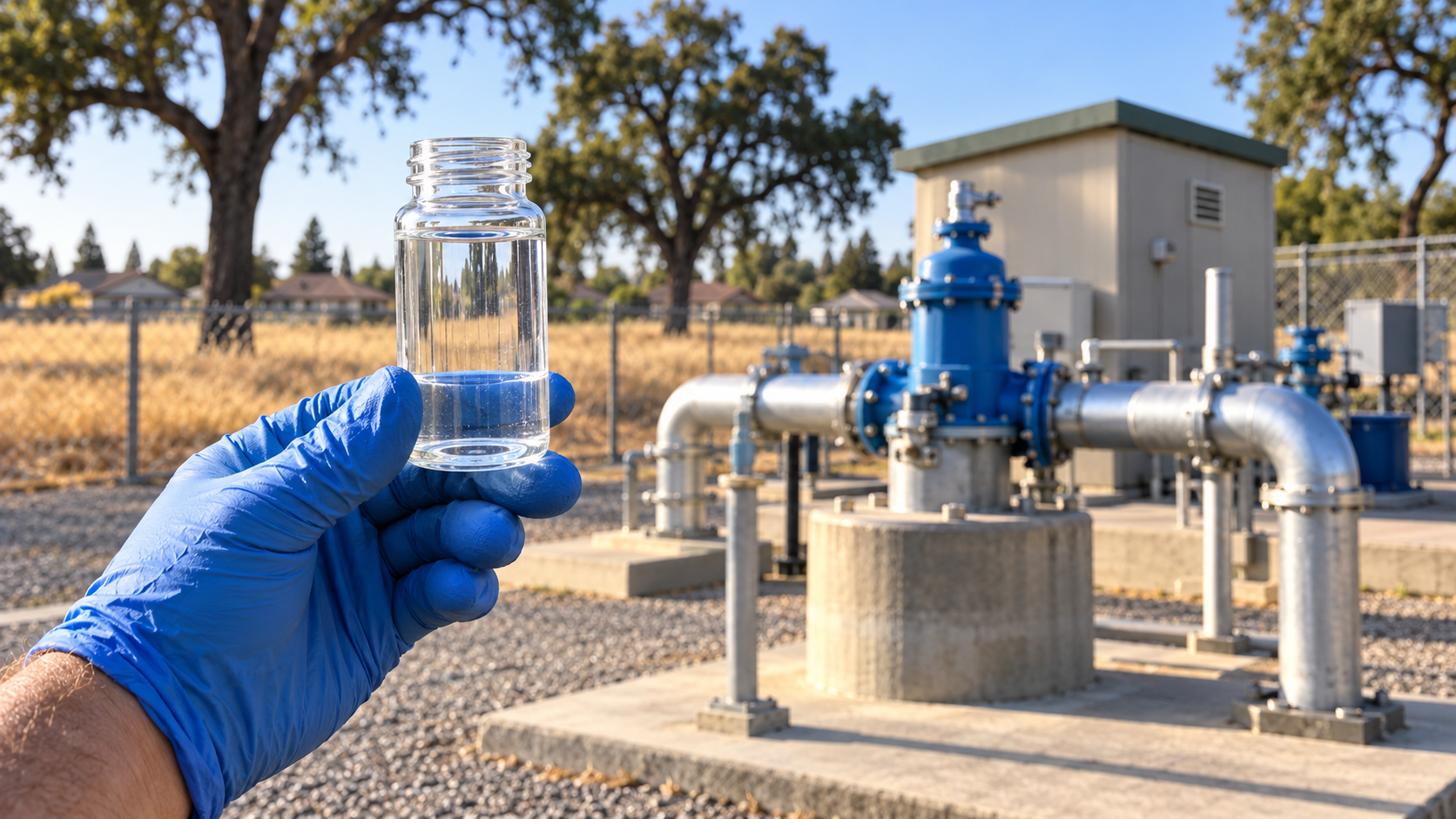
The Rio Linda-Elverta Community Water District’s newly released Consumer Confidence Report shows that hexavalent chromium was detected across the district’s groundwater system at an average concentration slightly above California’s new drinking-water standard.
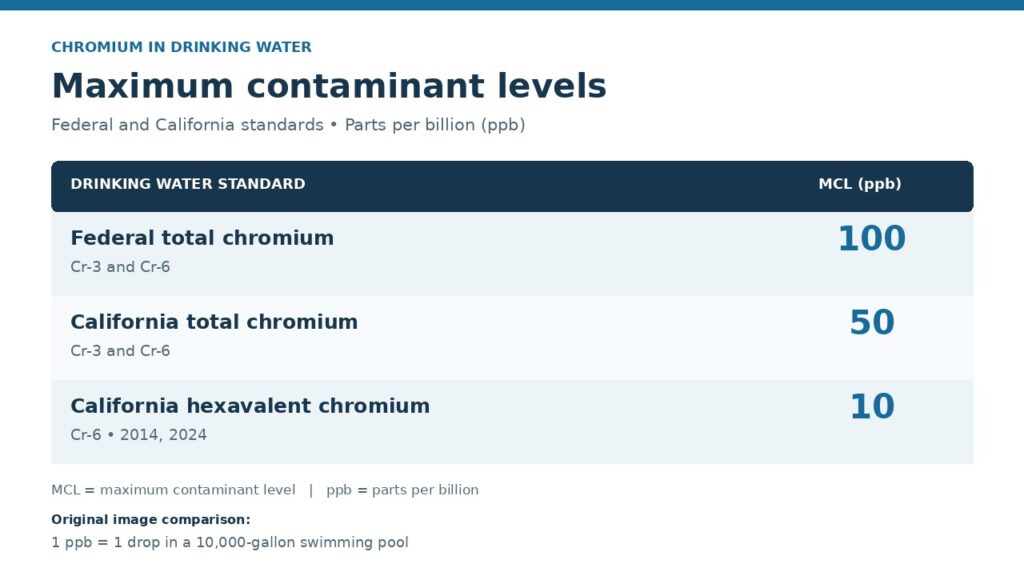
The district’s 2026 report covers water-quality data collected during 2025. It lists hexavalent chromium at an average of 10.6 parts per billion, with individual results ranging from 4.2 to 18 ppb.
California’s maximum contaminant level for hexavalent chromium is 10 ppb.
The district is not currently considered in violation. Under the state’s phased compliance schedule, a water system of Rio Linda-Elverta’s size has until Oct. 1, 2027, to meet the standard.
RLECWD says treatment systems are being designed for three well sites and are expected to be operating before that deadline.
“Some people who drink water containing hexavalent chromium in excess of the MCL over many years may have an increased risk of getting cancer,” the report states.
The annual report does not say that every district well or every household tap contained 10.6 ppb. The figure is the average listed for the district’s reported samples, which varied considerably from one result to another.
What the report does—and does not—say
The report lists both industrial activity and the erosion of natural deposits among the typical potential sources of hexavalent chromium.
It does not determine where Rio Linda and Elverta’s chromium originated or assign responsibility to any particular property, business or former military installation.
RLECWD obtains its water from 12 groundwater wells located throughout the community. According to the report, those sources are considered vulnerable to potential contamination associated with septic systems, unauthorized dumping, agricultural activity, dry cleaners, airports, fuel stations, vehicle-repair businesses and chemical or petroleum processing and storage.
A vulnerability designation does not establish that any listed activity caused a detected contaminant.
Bacteria tests came back clear
The district was required to collect 208 bacteriological samples from approved distribution-system locations during 2025.
None of those samples detected total coliform bacteria, fecal coliform bacteria or E. coli.
Arsenic remained within the standard
Arsenic results averaged 5.7 ppb and ranged from 3.4 to 10 ppb. The state and federal maximum contaminant level is 10 ppb.
The district notes that the water meets the current arsenic standard but contains low levels of the contaminant. Long-term exposure above the legal limit may increase the risk of skin damage, circulatory problems and cancer.
Other reported results included:
- Nitrate: Averaged 1.2 parts per million, below the 10-ppm standard.
- Total chromium: Averaged 6.9 ppb, below the 50-ppb standard.
- Barium: Averaged 0.04 ppm, below the 1-ppm standard.
- Fluoride: Averaged 0.17 ppm, below the 2-ppm standard.
- Radium 228: Averaged 0.09 picocuries per liter, below the 5-pCi/L standard.
Some PFAS compounds detected
The report lists no detections of PFOA, PFOS or PFPeA in the reported samples.
Two other PFAS compounds were detected:
- PFHxA: Average of 0.4 ppb, with results ranging from nondetectable to 3.6 ppb.
- PFHxS: Average of 0.33 ppb, with results ranging from nondetectable to 3 ppb.
The report does not list a maximum contaminant level for either compound.
Some results may be older
RLECWD cautions that not every contaminant is tested every year because certain concentrations do not change frequently. Some figures in the report may therefore come from samples collected more than one year ago.
The district also tested for additional organic and inorganic chemicals that were not detected, according to the report.
Residents with questions may contact RLECWD at 916-991-1000 during regular business hours, from 7 a.m. to 4 p.m. Monday through Friday.
Read the complete 2026 Consumer Confidence Report. rlecwd.com
Views: 1
