



County ordinance limits roosters by parcel size but leaves rules for hens, youth agriculture and commercial poultry largely untouched
By John Todd | Rio Linda Online
In most Sacramento County communities, a new ordinance regulating roosters might be viewed primarily as a response to noise complaints, neighborhood nuisances and illegal cockfighting.
In Rio Linda and Elverta, the subject carries considerably more history.
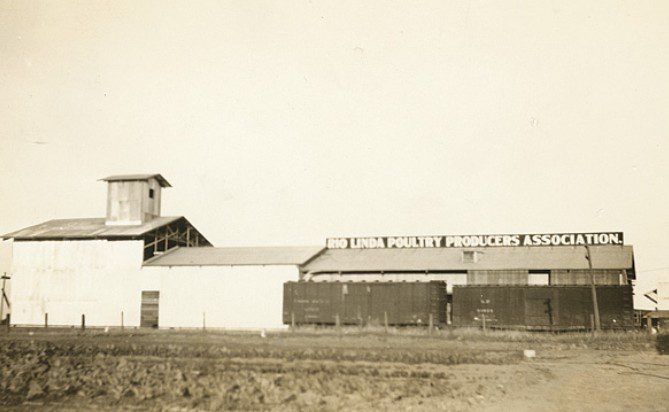
Chickens and egg production were once central to Rio Linda’s agricultural economy and community identity. Early promotional material described the area as the “Rio Linda Poultry and Orchard District,” while historical archives contain photographs of local poultry farms, chicken houses and the Rio Linda Poultry Producers Association dating to the 1910s and 1920s.
That heritage continued through the Chick & Egg Festival—and later the Chick‑n‑Que—which brought the community together during the 1950s and 1960s for a summertime celebration built around Rio Linda’s poultry roots.
Against that backdrop, Sacramento County’s newly updated rooster ordinance is likely to receive closer attention here than it would in a more urban neighborhood.
The Sacramento County Board of Supervisors adopted the changes June 16, and they became effective July 16. The regulations establish limits on the number of roosters that may be kept for incidental, noncommercial purposes, with the number determined by a property’s size and zoning.
The ordinance does not prohibit backyard chickens, change the regulations governing ordinary egg-laying hens or apply to commercial poultry operations. It also does not change agricultural activities protected by the county’s Right-to-Farm ordinance.
How Many Roosters Are Allowed?
Roosters remain generally limited to qualifying parcels of at least 10,000 square feet.
On properties zoned AG, UR, IR, RR, AR, RD-1, RD-2 or RD-3, the limits are:
- Five roosters on parcels between 10,000 square feet and one acre.
- Five roosters per acre on properties between one and 20 acres, with a maximum of 15.
- A maximum of 25 roosters on properties between 20.01 and 40 acres.
- A maximum of 50 roosters on properties of 40 acres or more.
The limits are lower in RD-4 through RD-7 residential zones:
- Two roosters on parcels between 10,000 and 21,780 square feet.
- Three roosters on parcels between 21,780 square feet and one acre.
- Three roosters on parcels of at least one acre, plus one additional rooster for every 10,000 square feet, with a maximum of 10.
Because Rio Linda and Elverta contain a patchwork of residential, agricultural-residential and agricultural zoning—and parcels ranging from conventional neighborhood lots to several acres—the practical effect will vary considerably from one property to another.
Property owners should verify their zoning before assuming a rooster is allowed or determining which limit applies.
Hens Are Treated Differently
The ordinance is directed specifically at roosters, not the backyard hens many Rio Linda residents keep for eggs.
Egg-laying chickens and certain other non-crowing fowl may still be kept on lots smaller than 10,000 square feet, subject to existing limits and care requirements. On residentially zoned property, the general allowance is one bird for every 1,000 square feet of parcel area or one for every 200 square feet of rear-yard area, whichever produces the smaller number.
Those birds must be kept in the rear yard, provided with adequate foraging space and housed at least 20 feet from neighboring residences. Chickens must also have access to a covered, four-sided coop where they can retreat and roost at night.
Exceptions for FFA, 4-H and Poultry Breeders
The county preserved accommodations for recognized youth agricultural programs, including FFA and 4-H. Animals participating in those programs may be raised on smaller parcels under an educational exemption.
That provision is particularly important locally, where agricultural education remains part of the community through Rio Linda High School FFA and other youth programs.
Legitimate poultry breeders, exhibitors and hobbyists may also apply through the Sacramento County Agricultural Commissioner for a no-cost registration allowing them to exceed the standard rooster limit or, in some cases, operate on a smaller parcel.
Approval is not automatic. The county will consider the size and layout of the property, animal enclosures, sanitation, food, water, shelter, neighborhood impacts and whether the requested number of roosters is reasonably necessary for the stated purpose. Properties with unresolved zoning violations are not eligible.
More Than Crowing and Noise
County officials say rooster complaints are not always limited to birds waking neighbors before sunrise.
Animal Control officers investigating a complaint may also evaluate whether the birds have adequate food, clean water, shelter and sanitary living conditions. They look for overcrowding, untreated injuries and evidence that birds are fighting or being kept under conditions associated with illegal cockfighting.
The ordinance prohibits tethering roosters and establishes minimum enclosure and care requirements. Owners must keep animal areas clean, properly manage manure and bedding, control flies and odors, protect feed from rodents and prevent drainage from mixing with accumulated waste.
Cockfighting remains illegal under California law. The presence of several roosters does not, by itself, establish illegal activity, but officers may investigate patterns suggesting birds are being bred, trained or kept for fighting.
Enforcement Will Be Complaint-Driven
The county does not plan to conduct routine inspections of every property where roosters are kept. Enforcement is expected to be driven primarily by complaints.
When an existing property is found to be out of compliance, the owner will generally receive written notice and have one month to meet the new requirements or seek registration through the Agricultural Commissioner. County officials may grant additional time under some circumstances.
Violations can ultimately result in civil or criminal penalties, nuisance-abatement proceedings or the loss of the privilege to keep animals on the property.
Residents can report suspected violations or animal-welfare concerns by calling 311 or using the county’s online reporting system.
A Matter of Balance for Rio Linda
Rio Linda’s rural character has always included some noise, dust, animals and agricultural activity. A rooster crowing in the distance is not foreign to a community where poultry farms once helped support local families and where chicken and egg production became part of the town’s public identity.
At the same time, today’s Rio Linda is not the Rio Linda of the 1920s—or even the Chick‑n‑Que era of the 1950s and 1960s. Agricultural parcels now sit beside subdivisions, and many residents live much closer together than earlier generations did.

The new ordinance attempts to draw a line between maintaining that agricultural tradition and addressing properties where large numbers of roosters create persistent noise, sanitation problems, overcrowding or animal-welfare concerns.
For most responsible backyard poultry owners, little should change. Hens remain permitted under established rules, youth agriculture remains protected, and legitimate breeders have a registration option.
The greatest changes will be felt on properties keeping unusually large numbers of roosters without a recognized agricultural, educational, breeding or exhibition purpose.
More information, including zoning requirements and registration materials, is available through the county’s Crowing Fowl Zoning Code Amendment page. Historical images of Rio Linda’s early poultry industry are available through the Sacramento History Online archive.
Post Views: 68
